D Company Losses — Operation Sheridan Sabre, December 4, 1968
December 4, 1968 — D Company loses three men
Research page — significantly updated 2026-07-17. Confirmed: three men of D Company, 2nd Battalion, 8th Cavalry were killed on December 4, 1968 during Operation Sheridan Sabre in Binh Long Province. The company commander, CPT Henry Colavita, has now given a detailed firsthand account: a feigned Chieu Hoi ambush during a link-up with Charlie Company at a captured enemy cache — see below. The exact grid and unit-level confirmation are still pending.
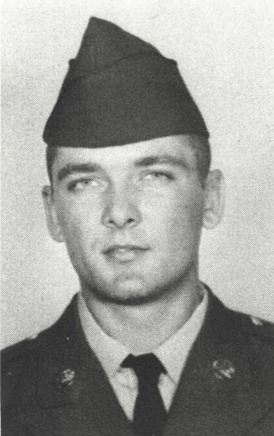
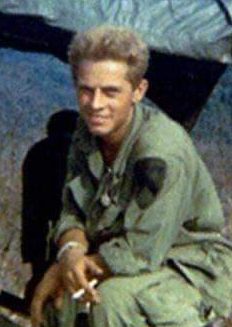
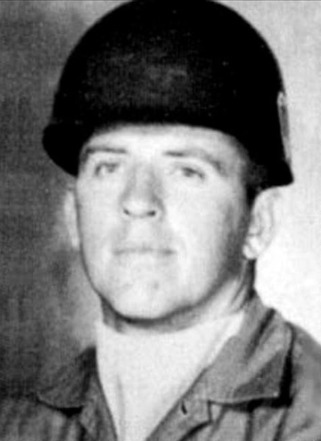
On December 4, 1968, D Company, 2nd Battalion, 8th Cavalry lost three men:
- SP4 Willie Gerald Jones, 21, of Fort Lauderdale, Florida — Wall Panel 37W, Line 40
- SP4 Donald Robert Stoltz, 20, of Milwaukee, Wisconsin — Wall Panel 37W, Line 42
- SSG William Charles Williams, 22, of Horton, Mississippi — Wall Panel 37W, Line 44
Their three names sit on consecutive even lines of Panel 37W, the pattern on the Wall that marks men killed in a single shared action. The Virtual Wall states directly: "Delta Company, 2/8th Cavalry, lost three men on 04 December 1968."
Operation Sheridan Sabre
By December 1968 the 1st Cavalry Division had just made a major relocation — from I Corps in the north, where it had spent much of the year near the DMZ and Hue, down to III Corps northwest of Saigon near the Cambodian border. Operation Sheridan Sabre (7 November 1968 – 4 April 1969) was the division's first major operation in III Corps, part of the larger Operation Toan Thang II under II Field Force, Vietnam.
The mission was interdiction: block PAVN infiltration routes from Cambodia into the populated areas south of Saigon. The 2nd Brigade — D Company's parent — operated from LZ Rita and LZ Billy in Binh Long Province, conducting reconnaissance-in-force operations in the Fishhook area along the Saigon River infiltration corridor.
The day before: D/2-7 Cav
The men died the morning after one of the most costly single-day actions of Operation Sheridan Sabre. On December 3, Company D of the 2nd Battalion, 7th Cavalry — a sister battalion in the same brigade — air-assaulted into a landing zone northeast of Hớn Quận (Hon Quan) and was met immediately by B-40 rockets, 82mm mortars, .51-caliber machine guns, and command-detonated mines. The PAVN force was estimated at battalion strength. After five hours of fighting, supported by airstrikes and aerial rocket artillery, the contact broke — but at a cost of 24 Americans killed and 1 missing. Sergeant John Noble Holcomb was posthumously awarded the Medal of Honor for his actions in that battle.
Colavita's own account (below) describes a distinct mission on December 4 — a link-up with Charlie Company at a captured cache, not a continuation of the D/2-7 fight — but whether the two actions shared the same general area of the brigade's AO has not been confirmed against unit records.
The mission: a captured cache and "Chicken Valley"
Per Colavita's memoir, D Company was moving to link up with Charlie Company, which had discovered a large cache of enemy supplies and documents. The position needed to be secured so that battalion, brigade, and division staff and intelligence officers could come in, inspect the find, and remove it. On the march in, chickens ran out of the brush ahead of the company — the soldiers named the area "Chicken Valley" on the spot. White Skull platoon took one WIA in a brief contact along the way, characterized as not serious enough that the man left the field.
The commander's account: a feigned surrender
As the company closed on the objective, soldiers from Charlie Company reported a group of NVA under observation who appeared to want to surrender — Chieu Hoi. Charlie Company's commander, Captain Gonzales, radioed battalion (net call sign "Stone Mountain 6") that Delta's White Skull platoon was closest to the potential prisoners and suggested Delta close in on them. Colavita, in his own words:
"But this date, December 4, 1968, would become the worst day in my life because in this relatively brief encounter, Delta suffered three combat deaths... I was not in a position to observe what was going on in this patch of jungle where some NVA allegedly wanted to surrender, but I urged my soldiers to use extreme caution in approaching them. But the NVA Charlie Company thought wanted to give up actually only wanted to kill some more Americans. By the time their true intentions were clear, three of my men were killed and, of course, so was the entire group of NVA that killed them."
The three men killed in this ambush were SP4 Willie Gerald Jones, SP4 Donald Robert Stoltz, and SSG William Charles Williams — all of White Skull platoon. Full account: colavita-henry-verbal-account-dec4-1968.
The night attack and the Arclight strike
Delta and Charlie Companies then formed a joint two-company perimeter around the cache site so recovery of the dead, wounded, and captured documents could continue. COL Frank Leonidas Henry — "Colonel Henry," the battalion commander, net call sign "Stone Mountain 6" (see "The commander's account" above for the identification) — advised Colavita the position might be the elusive COSVN (Central Office for South Vietnam) headquarters and ordered both companies to hold the ground overnight while intelligence officers worked. Foxholes were dug, concertina wire strung, and artillery defensive targets plotted with Charlie Company.
That night the position took a large NVA mortar and ground assault — dozens of rounds followed by soldiers attempting to slip up to the wire and turn the perimeter's own Claymore mines around. Colavita called in Army helicopter gunships, Spooky, and Blue Max gunships throughout the night; the fight lasted for hours before the enemy broke contact at first light. Neither Delta nor Charlie Company suffered any further KIA in this fight — Colavita attributes this to the preparation time Colonel Henry's early warning had allowed. The next morning, after the wounded were evacuated and resupply came in, both companies were ordered to move a safe distance away so a flight of B-52s could strike the position (an Arclight). Command ultimately concluded the site was not, in fact, COSVN.
SSG Williams: in his commander's words
Later, reflecting on the day's losses, Colavita gave the first personal detail this archive has for any of the three men beyond casualty-record facts:
"Sergeant Williams, for example, was the squared away squad leader who asked me about being reassigned to the rear. He was the one with a wife, a son and a college degree and a bright future. His wife was now a widow, his son was fatherless, his college degree was worthless and his bright future was no longer a possibility."
Colavita also noted the day brought his command's "friendly body count" to five, following PFC Michael Cromie (Nov 18) and SP4 Raymond Ahern (Nov 26) — see soldiers/cromie-michael and soldiers/ahern-raymond.
SSG Williams: a comrade's account
SSG William Charles Williams was the 2nd squad team leader in D Company — confirmed by a tribute left on the Virtual Wall by his squad leader, Mike "Mouse" McGhie, who later ran the Angry Skipper Association website for D/2-8 veterans.
A fellow sergeant, Barney Tharp, served alongside Williams from the beginning of their military service. They attended the NCO Academy at Fort Benning together as part of the 25th class, 85th Company, graduating June 4, 1968, then went to Fort Polk together as young buck sergeants. At the Long Binh replacement depot, the Army separated them — Williams to the 1st Cavalry Division, Tharp to the 1st Infantry Division. "We hugged as we departed, and vowed to write to each other every week," Tharp wrote. They did. One of his letters came back with an Army notification that Williams had died on December 4, 1968. Tharp named his son William in his memory.
The location records are disputed
As with the 1965 cluster in Pleiku, the individual casualty records are unreliable for province. DCAS lists Tay Ninh Province for at least one of the three men — but Tay Ninh was the 1st Brigade's operational area during Sheridan Sabre, not the 2nd Brigade's. Until confirmed against a unit operational report, this page treats Binh Long Province as the correct setting based on the 2nd Brigade's documented AO.
Help us complete the record
If you served with D Company, 2/8 Cavalry during Operation Sheridan Sabre, or knew Willie Jones, Donald Stoltz, or William Williams, we want to hear from you. Please reach us through the contribute form.
If you served with D Company, 2/8 Cav during Operation Sheridan Sabre, or knew SP4 Jones, SP4 Stoltz, or SSG Williams, we'd like to hear from you. We're trying to reconstruct the action that took all three on December 4, 1968. You don't need to have researched anything or know the operation's name — a nickname, a face, or a fragment of that day all help us complete the record.
Share what you know →Can anyone confirm exactly when COL Frank Leonidas Henry relieved LTC John V. Gibney as CO, 2nd Battalion, 8th Cavalry (or vice versa)? Both are documented commanding the battalion in this general window (per Colavita's book and Gibney's own record, respectively), but no source yet gives an exact handoff date. Leading theory (per Michael): Gibney had rotated off battalion command to a 2nd Brigade staff position by early December 1968 — a battalion commander personally leading POW negotiations was always an odd fit for someone still running a field unit — but this isn't yet confirmed by a primary source; none of the three contemporary press pieces on file for Gibney give him a staff title, only his rank and delegation role.
Share what you know →