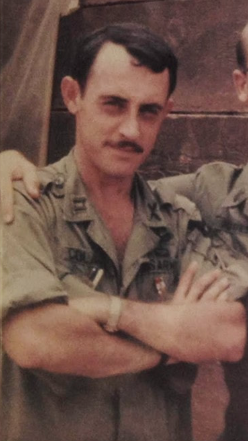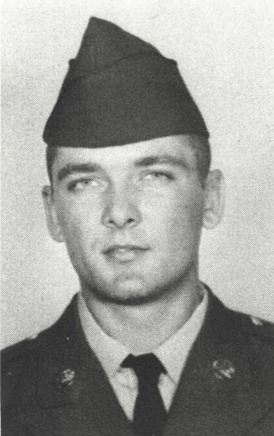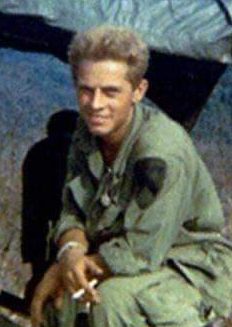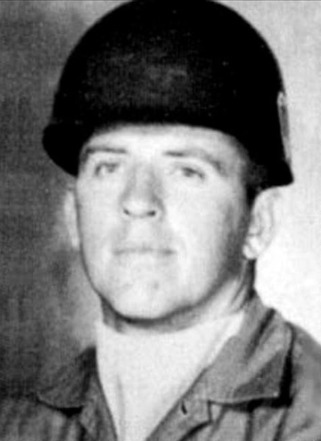
Verbal Account — CPT Henry Colavita on the December 4, 1968 "Chicken Valley" Ambush
Verbal account, December 4, 1968 — CPT Henry Colavita, Commander, D Company, 2/8 Cav
Excerpt from Colavita's memoir, "Company Grade: Memoir of an Angry Skipper". Quoted as written; page number not yet cited.
D Company was moving to link up with Charlie Company, which had discovered a large cache of enemy supplies and documents and needed the position secured so that battalion, brigade, and division staff and intelligence officers could come in, inspect the find, and remove it. On the march in, chickens ran out of the brush ahead of the company — the men named the area "Chicken Valley" on the spot. White Skull platoon took one WIA in a brief contact along the way, characterized as not serious enough that the soldier left the field.
It was in this setting that Colavita's own account of the ambush begins:
"But this date, December 4, 1968, would become the worst day in my life because in this relatively brief encounter, Delta suffered three combat deaths. Years later, I am still sick over that day. As the action slowed, it was soldiers from Charlie Company who reported that a group of NVA they had under observation appeared to want to surrender. Captain Gonzales further said, on the battalion radio net to Stone Mountain 6, that members of Delta Company's White Skull platoon were closest to these potential prisoners of war and suggested Delta Company close in on them. Chieu Hoi was the term in Vietnamese for surrendering, and it was always considered that live prisoners, as opposed to dead soldiers, were a valuable source of intelligence. I was not in a position to observe what was going on in this patch of jungle where some NVA allegedly wanted to surrender, but I urged my soldiers to use extreme caution in approaching them. But the NVA Charlie Company thought wanted to give up actually only wanted to kill some more Americans. By the time their true intentions were clear, three of my men were killed and, of course, so was the entire group of NVA that killed them."
Later that day, once a joint Delta/Charlie perimeter was established around the cache site (see the event page for the COSVN speculation and the all-night attack that followed), Colavita reflected on the losses:
"...I had time to reflect on my three dead troopers. The friendly body count on my watch was now five and I'd had the company in the field less than two months. But, although every friendly loss is tragic, it was getting tougher on me because I was getting to know the men personally. Sergeant Williams, for example, was the squared away squad leader who asked me about being reassigned to the rear. He was the one with a wife, a son and a college degree and a bright future. His wife was now a widow, his son was fatherless, his college degree was worthless and his bright future was no longer a possibility. The loss of these three troopers as well as the two previously killed men was painful to me, as well as to all the friends they had made in the company. I knew their names now and could connect those names with faces. I didn't suffer the embarrassment I did after my first D Company KIA. After Michael John Cromie was killed on November 18th, I asked his platoon leader, 'Where's Trooper Cromie been, R & R? I don't think I've seen him for a couple of weeks now.' To which the lieutenant replied, 'He's been dead for a couple of weeks now.'"
This account resolves the central open question on the event page: how the three men died. Delta and Charlie Companies believed they had a group of NVA prepared to surrender (Chieu Hoi) under observation; Delta's White Skull platoon — the platoon carrying SP4 Willie Jones, SP4 Donald Stoltz, and SSG William Williams — was ordered to close in and take them prisoner. The NVA group had no intention of surrendering and ambushed the approaching soldiers, killing three before the platoon (or supporting fire) killed the entire NVA group in return. This is consistent with the "friendly body count... now five" Colavita cites — PFC Michael Cromie (Nov 18) and SP4 Raymond Ahern (Nov 26) preceding these three — and confirms "White Skull" as the fuller name of the platoon recorded elsewhere on this archive simply as "Skull" (see soldiers/jones-willie-gerald, soldiers/stoltz-donald, soldiers/williams-william).
The passage naming SSG Williams — a squad leader who had asked about a rear assignment, married with a son and a college degree — is the first personal, human detail this archive has for any of the three men beyond casualty-record facts. See soldiers/williams-william.
Captain Gonzales was Charlie Company's commander at the time (per Michael). "Stone Mountain 6" was the 2/8 Cav battalion commander's radio callsign — COL Frank Leonidas Henry ("Happy Tiger"), confirmed by the Vietnam Helicopter Pilots Association and the Army Aviation Hall of Fame (Quad-A) as CO, 2nd Battalion, 8th Cavalry, 1968-69, matching Colavita's own naming of "Colonel Henry" elsewhere in the same passage. A profile folder Michael supplied for Henry — a 1969 hometown-newspaper clipping and his 1977 obituary — pins the end of his 2/8 Cav command to approximately March 1969 (see soldiers/henry-frank), and he's now placed in the command chain directly after LTC John V. Gibney (soldiers/gibney-john, CO from 16 March 1968), with an estimated handoff around October 1968 — a ~6-month command tour ending in March 1969 fits that start cleanly, though the exact handoff date isn't yet confirmed by a primary source (unit command roster or ORLL). The leading theory (per Michael) on the Gibney side is that he had rotated off battalion command to a 2nd Brigade staff position around the same time — a battalion commander personally leading POW negotiations, as Gibney was doing by late December 1968, was always an odd fit for someone still running a field unit.
Not yet resolved: the exact grid/platoon positions at the moment of contact, and confirmation of the Gibney/Henry command-handoff date and Gibney's brigade-staff move.