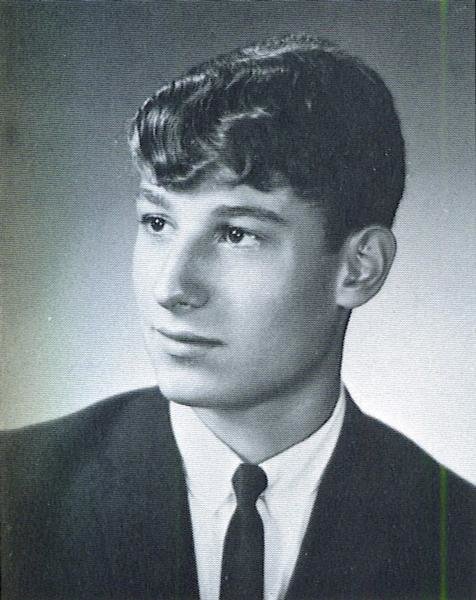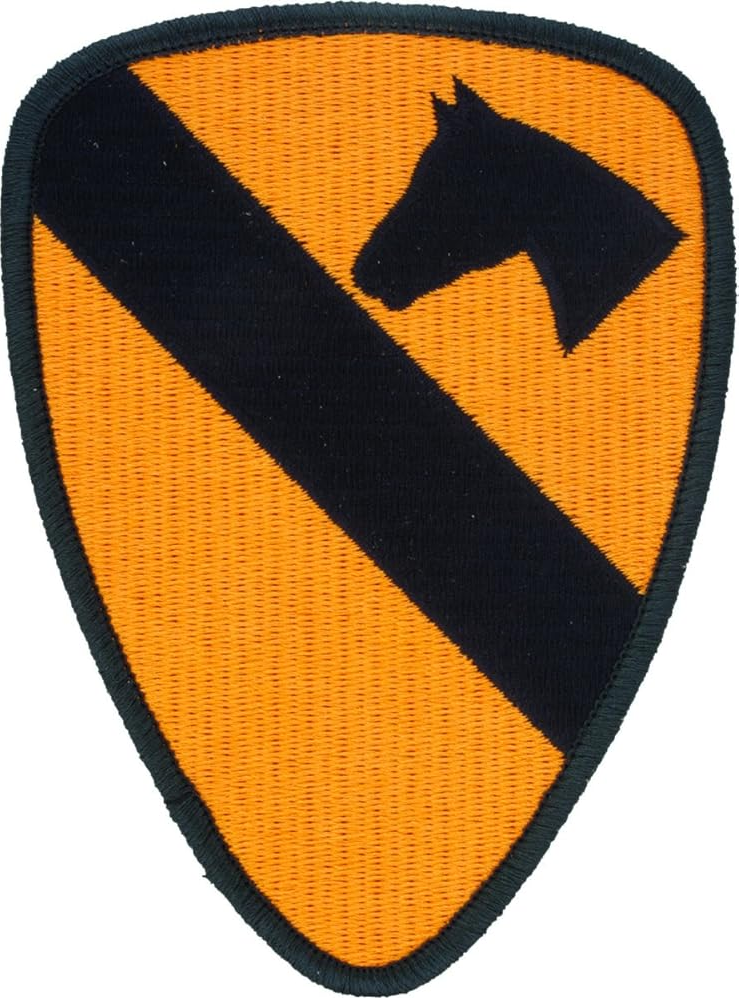
D Company Loss — PFC Henry Tony Rava, Friendly Fire, Died of Wounds, February 18, 1970
February 18, 1970 — PFC Henry Tony Rava
Incident page. Primary sources: Virtual Wall, VVMF, and Honor States casualty records; 1st Cavalry Division Operational Report – Lessons Learned for the period ending 30 April 1970 (DTIC AD0512505). The specific circumstances of the friendly fire incident — which unit's artillery or mortar fire struck him, and the exact position of D Company on February 18 — are not established in available sources.
On February 18, 1970, PFC Henry Tony Rava died of wounds in Tay Ninh Province. He was twenty years old, a rifleman with D Company, 2nd Battalion, 8th Cavalry, and he had been in Vietnam since October. The fire that killed him was friendly — artillery, rocket, or mortar from U.S. or allied forces. He is inscribed on the Vietnam Veterans Memorial, Panel 13W, Line 31.
The casualty codes
The Army's casualty record for Rava carries a combination that appears infrequently on the Wall: Hostile / Died of Wounds / Misadventure / Artillery-Rocket-Mortar / Ground Casualty. Each element is precise. "Hostile" reflects the combat environment — he was in a war zone, under the conditions of war. "Died of Wounds" means he survived initial wounding but died before medical intervention could save him. "Misadventure" is the Army's term for death caused by friendly fire rather than the enemy. "Artillery, Rocket, or Mortar" identifies the weapon type. Together the codes record that PFC Rava was struck by friendly artillery, rocket, or mortar fire and died of those wounds on February 18, 1970.
The Purple Heart followed automatically — the hostile classification made him eligible. A soldier killed by friendly fire in a combat zone receives the same recognition as a soldier killed by the enemy, because the war put him there.
Where the battalion was
In February 1970, the 2nd Battalion, 8th Cavalry was operating deep in western War Zone C, a corridor of jungle, trail networks, and Cambodian border terrain in Tay Ninh Province. The battalion was under the 1st Brigade, whose mission — as the 1st Cavalry Division's own operational report states — was "to interdict enemy lines of communication and supply and to destroy enemy forces, installations, and equipment." There was no single named operation. The 1st Brigade, with the 2-8 Cav, 2-7 Cav, 2-5 Cav, and elements of the 11th Armored Cavalry Regiment, was conducting continuous operations to disrupt NVA supply movements through War Zone C toward the population centers to the south. This was the buildup period preceding the Cambodian Incursion of May 1970 — the division was pressing hard against the border corridor that fed the NVA's III Corps units.
Four days after the heaviest contact of the month
The four days before Rava's death were the bloodiest the battalion had seen in weeks. On February 4, elements operating near FSB Tina clashed with an estimated company-sized NVA force, losing 4 US KIA and 9 WIA; captured documents identified the C-21 Reconnaissance Company, 95th NVA Regiment. On February 14, C Company, 2/8 Cav — reinforced by a troop of the 1-11 Armored Cavalry Regiment — made contact with elements of the 272nd NVA Regiment at grid XT251704. That fight lasted hours and cost 10 US KIA and 30 US WIA; 46 NVA were killed. The 272nd Regiment was one of the 9th VC Division's main-force units, well-equipped and fighting hard in the border corridor.
PFC Rava died four days after that action, on February 18. The ORLL records no significant enemy contact on that date for the battalion — which is consistent with the nature of friendly fire deaths. They do not arise from engagements; they arise from the constant artillery and mortar fires that surrounded ground operations in a high-intensity AO, and from the inevitable human and mechanical failures of those fires. A fire mission goes long. A short round falls inside the perimeter. A call for fire is plotted incorrectly. The battalion was surrounded by friendly artillery in February 1970 — FSB Tina, FSB Flasher, FSB Carolyn, FSB Jay, and others were all active in the 1st Brigade's AO during this period, collectively maintaining continuous fires to suppress enemy movement. Rava was killed by one of those fires.
Why the position is not established
The specific fire support base or patrol position D Company occupied on February 18 is not recorded in available sources. This is not simply a gap in the documentary record — it is partly a consequence of how the division operated.
The 1st Cavalry Division's Operational Report for this period states directly that "light fire support bases were moved frequently, thus limiting the enemy's opportunity for reconnaissance." In western War Zone C in early 1970, FSBs were mobile by design. FSB Carolyn, FSB Tina, FSB Flasher, FSB Jay — none of them were fixed positions that a battalion occupied for months. They were temporary platforms, moved on airmobile timelines, positioned and repositioned to maintain fire coverage as ground units maneuvered. D Company could have been at a temporary FSB, in a night defensive position in the jungle, or on patrol. Without the 2/8 Cav daily staff journal (NARA RG 472) for February 18, 1970, the position cannot be confirmed.
Henry Rava — from Mt Angel, Oregon
Henry Tony Rava was from Mt Angel, a small farming community in Marion County, Oregon, in the Willamette Valley. He was born in 1949, drafted from Oregon, and arrived in Vietnam on October 7, 1969 — assigned to D Company as a light-weapons infantryman (MOS 11B10). He was twenty years old and had been in-country four months and eleven days when he died. He was brought home to Mt Angel and buried at Calvary Cemetery.
He is one of eleven D Company soldiers who died in 1970. Three others died in the weeks immediately around him: SP4 Kevin Frierson (January 25), SP4 Fred Flashner (February 28), and SP4 Gordon Ware (March 6) — all in the same border corridor, all in the months before the Cambodian Incursion that the division was preparing.
A classmate's account
In January 2023, Charles Simpson — a Military Policeman with the 1st Infantry Division at Lai Khe Base Camp from 1969 to 1970 — left an account on a Vietnam War travel website. He had gone to high school with Henry Rava. "I had a friend killed there Henry T. Rava, who I had went to High School with that died of shrapnel wounds," he wrote.
The identification is solid — Simpson named him by full name and personal relationship. The description of shrapnel wounds aligns with the Army casualty codes (artillery, rocket, or mortar) and is the kind of physical detail a friend carries accurately across fifty years.
Simpson also connected Rava's death to an ammo dump explosion at the Lai Khe airstrip, and placed the death "back in Seattle" — but neither detail holds up. Lai Khe was a 1st Infantry Division installation; Rava served with the 1st Cavalry Division in Tay Ninh Province, over fifty miles away. Rava is buried at Calvary Cemetery in Mt Angel, Oregon, not Seattle. The ammo dump explosion at Lai Khe was real — another commenter, Otis Felton, a postal sergeant stationed there in the same period, described being knocked unconscious by it — but it belongs to Simpson's own experience at his own post. The most likely reading is that Simpson heard of a classmate's death and, at some point in the fifty years since, the most vivid event from his own tour became attached to it in memory. His hedge — "I do believe I remember" — is honest.
What the account establishes: Henry Rava had a friend from home in Vietnam. Someone who knew him before the war was serving in-country at the same time.
Help us complete the record
The specific circumstances of the friendly fire incident that killed Henry Rava are not known from available sources — which unit's fire, what fire mission, what went wrong. If you served with D Company, 2nd Battalion, 8th Cavalry in War Zone C in early 1970, or knew Henry from Mt Angel, Oregon, please reach us through the contribute form. Any memory — of the man, the company, or that February in the War Zone C corridor — helps complete the record.
If you served with D Company, 2nd Battalion, 8th Cavalry in War Zone C in early 1970 — or knew Henry Rava from Mt Angel, Oregon — we'd like to hear from you. He died on February 18, 1970, four months and eleven days into his tour, from friendly artillery, rocket, or mortar fire. What do you remember of him, or of D Company in that period? Any memory helps complete the record.
Share what you know →