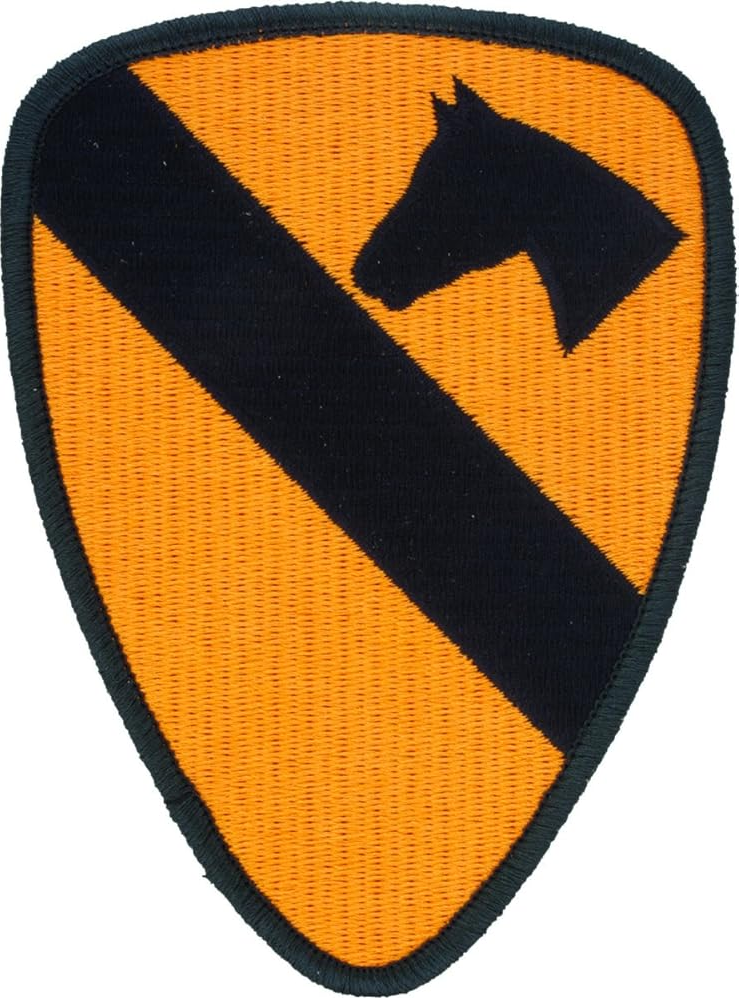
Operation Jim Bowie — 1st Cav Search and Destroy, Kim Son Valley (March 1966)
Operation Jim Bowie — search and destroy in the Kim Son
Context page — operation level. Built from the VHPA/RAND battle record, the 2/8 Cavalry firebase data, and the operations that bracket Jim Bowie. It establishes the operation that framed SGT Paul Malec's wounding on 21 March 1966 — not what his company did hour by hour, which awaits the battalion staff journal and the operation's after-action report. The operation, its area, and its character are well established; the specific 21 March action is treated as an open thread, to be confirmed.
Where it sits in the spring 1966 fighting
By March 1966 the 1st Cavalry Division had been fighting through Binh Dinh Province for two months. Jim Bowie nests between two larger operations:
- Masher / White Wing (the Bong Son campaign, 25 January – 6 March 1966) — the large search-and-destroy sweep of the Bong Son plains and surrounding valleys that preceded it.
- Operation Jim Bowie (7–28 March 1966) — a search-and-destroy operation by the division's 1st and 2nd Brigades into the Kim Son, Soui Ca, and Vinh Thanh valleys, aimed at destroying the Kon Truck staging area west of the Kim Son Valley, with a sweep of the upper Song Ba Valley to the northwest.
- Operation Lincoln (opening around 25 March 1966) — the operation the division rolled into as Jim Bowie closed.
The character of the fighting — and why it matters here
The casualty profile of Jim Bowie is unusual and important for Malec's story. Reported losses were 3 killed but 377 wounded, with the majority of wounds attributed to punji-stake booby traps (VHPA, citing the RAND chronology). Bad weather grounded USAF tactical air and delayed the start by two days. This was not principally a stand-up firefight; it was an operation dominated by traps and explosive devices in close country.
That character bears directly on the discrepancy in Malec's record. His official casualty record codes the 21 March wounding as hostile, with multiple fragmentation wounds. The account a soldier who served under him gave the family describes an accidental detonation while he was setting a trap, which also set off the smoke grenades he was carrying. In an operation where the overwhelming majority of casualties came from traps and booby-trap-type explosions, the family's account is entirely consistent with the kind of wounding Jim Bowie produced — and helps reconcile the two versions rather than set them against each other.
The 21 March communiqué — the day Malec was wounded
The official MACV daily communiqué (#080-66), dated 1700H on 21 March 1966 — the very day Malec received his wounds — describes the operation directly:
BINH DINH 21 MAR — Elements of the 1st Air Cavalry, conducting a search and destroy operation called Operation Jim Bowie, have had no significant contact in the nine days of searching for the enemy. To date, 14 VC have been killed in scattered light contact, while six VC have been captured and five suspects detained… The operation, in an area about 50 miles northwest of Qui Nhon, has been supported by 139 tactical air sorties. Friendly casualties are light, the majority of them sustained from punji sticks.
This same-day, official account is the strongest evidence yet on the nature of Malec's wounding. On 21 March there was no significant enemy contact — no firefight — and the friendly casualties the operation was producing were mostly from punji stakes and traps, not from engagements. That fits the family's account of an accidental detonation while setting a trap far better than it fits a "hostile fire" firefight, and it confirms the operation, the area (≈50 miles NW of Qui Nhon, i.e. the Kim Son), and the start (the "nine days" of searching dates the operation's opening to about 12–13 March). It does not, by itself, pin Malec's individual action — that still needs the unit journal — but it sets the context tightly.
Where D Company — and SGT Malec — fit
The 2/8 Cavalry firebase data places B and D Companies, 2/8 Cav at FB Phoenix City (BR629820) on 13 March 1966, with battalion elements at LZ Nail, Ps Drill, and nearby positions the same day — squarely inside the Kim Son operating area. SGT Paul Malec of D Company received the fragmentation wounds that would prove fatal on 21 March 1966, during this operation. He was evacuated — to Japan, then to Fort Campbell, Kentucky, by his family's account — and died of those wounds on 14 May 1966.
The open thread is the 21 March action itself: which element of D Company, where, and by what mechanism. That awaits the 2/8 Cav daily staff journal (NARA RG 472) and the operation's Combat After Action Report — a document that was previously on DTIC (AD0829472) but has since been removed, and now has to be pulled from the National Archives or the Donovan Research Library.